Friday, February 23, 2007
And a little child shall lead us
Do you suppose that this little girl chould show us something about living alongside each other in peace? Read this Haaretz article : Israeli girl found wandering through Hebron returned safely home


Thursday, February 22, 2007
Hebron Reflection

I recently received this email from a member of the Christian Peacemaker Teams in Hebron. Hebron is a microcosm of the West bank. A small Jewish Israeli settlement has been built in the middle of a mostly Muslim Arab city. The small settlement is protected by over 2000 Israeli soldiers and security personnel. I can say from personnel experience, even if you are a privileged American, dealing with the Israelis in Hebron is pretty intimidating.
HEBRON REFLECTION:
"This is Our Life"By Abigail Ozanne
This morning I was reflecting that in the nearly four months I had been in Hebron I have been cursed, insulted, spat at, pushed, threatened with arrest, detained, tear gassed, had my home invaded by soldiers, stoned, and threatened with death. It is only a taste of what the Palestinians endure.Recently the soldiers arrested a journalist for taking pictures. The soldiers grabbed him, handcuffed and blindfolded him, and led him away. I expressed how sorry I was to his brother. The brother replied, "this is our life."
He said that at different times in the past Israeli forces had shot, beaten, and arrested him.Two weekends ago, after soldiers beat two men, one to unconsciousness, tear gassed everyone in an enclosed space, and arrested several people, including the journalist, I said what a terrible day it had been. Our Palestinian neighbor answered, "this is our life."
I am a member of the Undoing Racism Working Group in CPT. We have been working on addressing racism within CPT. Through this work, I have become more aware of my unearned privilege as a white American. In Palestine this means that I am asked for ID less. The soldiers cannot arrest me although police can. The soldiers are not likely to beat me. If I am arrested, I do not need to fear being tortured. I am allowed to go most places in the West Bank. Soldiers are less likely to invade our home. If they do invade, they are not likely to ransack it. If I am hurt, arrested, or killed, the international community will say that it is wrong. The Palestinians we work with do not have any of these privileges. This is racism.
As I go about my work, I seek to stand with the oppressed, to dare to be vulnerable. I try to listen to our Palestinian partners and friends about their experiences. I try to understand. And I acknowledge that what I experience is only a portion of the suffering of the Palestinians. I have many privileges here not shared by the majority of the population. Additionally, at the end of my time in Palestine, I can go home. For the Palestinians, this is their life.
Christian Peacemaker Teams is an ecumenical initiative to support violence reduction efforts around the world. To learn more about CPT's peacemaking work, visit our website www.cpt.org Photos of our projects are at www.cpt.org/ gallery A map of the center of Hebron is at http://www.reliefweb.int/rw/fullMaps_Sa.nsf/0/5618737E38C0B3DE8525708C004BA584/$File/ocha_OTS_hebron_oPt010805.pdf?OpenElement The same map is the last page of this report on closures in Hebron: www.humanitarianinf o.org/opt/ docs/UN/OCHA/ ochaHU0705_ En.pdf
"This is Our Life"By Abigail Ozanne
This morning I was reflecting that in the nearly four months I had been in Hebron I have been cursed, insulted, spat at, pushed, threatened with arrest, detained, tear gassed, had my home invaded by soldiers, stoned, and threatened with death. It is only a taste of what the Palestinians endure.Recently the soldiers arrested a journalist for taking pictures. The soldiers grabbed him, handcuffed and blindfolded him, and led him away. I expressed how sorry I was to his brother. The brother replied, "this is our life."
He said that at different times in the past Israeli forces had shot, beaten, and arrested him.Two weekends ago, after soldiers beat two men, one to unconsciousness, tear gassed everyone in an enclosed space, and arrested several people, including the journalist, I said what a terrible day it had been. Our Palestinian neighbor answered, "this is our life."
I am a member of the Undoing Racism Working Group in CPT. We have been working on addressing racism within CPT. Through this work, I have become more aware of my unearned privilege as a white American. In Palestine this means that I am asked for ID less. The soldiers cannot arrest me although police can. The soldiers are not likely to beat me. If I am arrested, I do not need to fear being tortured. I am allowed to go most places in the West Bank. Soldiers are less likely to invade our home. If they do invade, they are not likely to ransack it. If I am hurt, arrested, or killed, the international community will say that it is wrong. The Palestinians we work with do not have any of these privileges. This is racism.
As I go about my work, I seek to stand with the oppressed, to dare to be vulnerable. I try to listen to our Palestinian partners and friends about their experiences. I try to understand. And I acknowledge that what I experience is only a portion of the suffering of the Palestinians. I have many privileges here not shared by the majority of the population. Additionally, at the end of my time in Palestine, I can go home. For the Palestinians, this is their life.
Christian Peacemaker Teams is an ecumenical initiative to support violence reduction efforts around the world. To learn more about CPT's peacemaking work, visit our website www.cpt.org Photos of our projects are at www.cpt.org/ gallery A map of the center of Hebron is at http://www.reliefweb.int/rw/fullMaps_Sa.nsf/0/5618737E38C0B3DE8525708C004BA584/$File/ocha_OTS_hebron_oPt010805.pdf?OpenElement The same map is the last page of this report on closures in Hebron: www.humanitarianinf o.org/opt/ docs/UN/OCHA/ ochaHU0705_ En.pdf
Tuesday, February 20, 2007
The last word
There are a lot of words floating around our media that seem to be used indiscriminately without providing any definitions. Words like terrorist, militant, radical Islamic state and moderate Arab state appear everywhere, but I am not always clear who we are talking about. Unless we come up with a truth in labeling law for the media that requires a definition of terms be attached to each article, we may need another vehicle to decipher the information. Looking at examples of what is being described might be helpful. Under that method it appears that a radical Islamic state is a state that is unable to support US policies because it has sufficient democratic institutions that the government needs to be sensitive to the opinions of its citizens. A moderate Arab state seems to be an authoritarian state whose leaders do not have listen to their citizens and therefore can support US policies. This division does, at times seem to create some odd situations. Recently US intelligence officials showed media representatives a sampling of weapons that they claimed were provided by the “radical Islamic state”, Iran, to Iraqi “militants” and “terrorists”. The officials claimed that these weapons had killed 170 American troops since the beginning of the war. When I heard this I wondered where the weapons have come from that killed the other 3000 soldiers. For answers to questions like this it is generally useful to follow the money. In this case I wouldn’t be at all surprised if that road didn’t lead through the “moderate Arab state” of Saudi Arabia. These are the folks that brought us most of the 9/11 highjackers, the mujahadeen in Afghanistan including Osama bin Laden and who export the intolerant, fundamentalist Wahabist version of Islam throughout the world. This situation raises the question: “How do situations like this happen?”. A few years ago I learned in Sunday School that when one is reading the book known to the church as the Gospel of Matthew and one asks the question “Why is this story included?”, the answer is usually Moses. In the case of the Middle East, when one asks the question “Why is this odd behavior happening?”, the answer is usually oil.
Wednesday, February 14, 2007
Watch our for the boogie man
During my growing up years, I can remember being admonished by my parents that I had better behave or the boogie man would get me. This admonishment is a remnant of European colonial experience when the Islamic pirates of the Boogle coast of Suliwesi in Indonesia were the most frightening group they could think of. Hence the name “boogie man”. I spent much  time looking under my bed and in my closet to be sure that the “boogie man” wasn’t there. On my recent trip to Tanzania and Rwanda, our group spent a day in a small village outside Arusha, Tanzania where I have been involved in projects to assist the local church and establish a health clinic. When we arrived, we were greeted with great fanfare by the residents and leaders of the village. As we mingled with the residents, one of my friends, who is the quintessential grandmother, knelt down to interact with a young girl. The young girl looked carefully at my friend and then burst into tears. As we discussed this reaction with our Tanzanian friends, they
  said that she had probably never seen a white person before and didn’t know what to make of this strangely colored person. They also said that for many Africans their only experience with white people is that of oppressors and American TV characters who carry guns and kill people. Parents admonish their children that if they don’t behave “the white man will come and kill you”. As the drumbeat towards war with Iran continues, we seem intent on insuring that Iranian parents will have a scary enemy with which to threaten their children. Although it might result in better behavior of Iranian children, I am not sure that we want another group of children growing up hearing “you had better behave or the Americans will come and kill you”. I recently received a photo collage of Iran from a friend. It portrays a country much different than the images that we receive from our media and politicians. A friend who is currently working in Iraq recently said “When my Iraqi friends go on vacation, they go to Iran. They tell me that I should go. It is such a beautiful place.” I encourage you to look at these pictures (click here) and ask yourself “Is this a country that we want to destroy?”.
 time looking under my bed and in my closet to be sure that the “boogie man” wasn’t there. On my recent trip to Tanzania and Rwanda, our group spent a day in a small village outside Arusha, Tanzania where I have been involved in projects to assist the local church and establish a health clinic. When we arrived, we were greeted with great fanfare by the residents and leaders of the village. As we mingled with the residents, one of my friends, who is the quintessential grandmother, knelt down to interact with a young girl. The young girl looked carefully at my friend and then burst into tears. As we discussed this reaction with our Tanzanian friends, they
  said that she had probably never seen a white person before and didn’t know what to make of this strangely colored person. They also said that for many Africans their only experience with white people is that of oppressors and American TV characters who carry guns and kill people. Parents admonish their children that if they don’t behave “the white man will come and kill you”. As the drumbeat towards war with Iran continues, we seem intent on insuring that Iranian parents will have a scary enemy with which to threaten their children. Although it might result in better behavior of Iranian children, I am not sure that we want another group of children growing up hearing “you had better behave or the Americans will come and kill you”. I recently received a photo collage of Iran from a friend. It portrays a country much different than the images that we receive from our media and politicians. A friend who is currently working in Iraq recently said “When my Iraqi friends go on vacation, they go to Iran. They tell me that I should go. It is such a beautiful place.” I encourage you to look at these pictures (click here) and ask yourself “Is this a country that we want to destroy?”.
Thursday, February 08, 2007
A recipe for genocide
I have taken a brief vacation from blogging while traveling in Africa. Some was enforced vacation as internet access in the bush was pretty limited. As usual, upon my return from an enforced vacation from news and information, not much has changed. The same old intractable problems that were there three weeks ago are still here today. In these poorest countries in the world, just getting through the day is an accomplishment in itself. People have little time to concern themselves with big power politics and the ramifications of big power decisions for world peace. One of our stops was Rwanda, the  isolated mountainous “Switzerland of Africa”. Although we were there to see the endangered Mountain Gorillas, it quickly became clear that even in this country only thirteen years separated from a genocide that killed over 1 million people in three months, big power political agendas affect peoples lives. Rwanda is a beautiful country of intense cultivation on steep mountain slopes. The people are lovely and friendly. One is left to wonder how these people could kill 1 million of their friends and neighbors in just three months. A visit to the Genocide Memorial yields a tale of the introduction of European imperialist racism into a culture that had existed for hundreds of years. Until the Europeans arrived Hutus and Tutsis were divided by
  economics and class. Wealth was measured by the number of cattle that you owned. (In the US we measure it by the number of cars or houses that you own) Tutsis were those that owned more than ten cows. The Europeans inserted the idea that one group was superior and more deserving than another that over time escalated into a civil war. As it appeared that the Tutsis were about to prevail in the conflict, France, under Francois Mitterand, decided to intervene on behalf of the Hutus. This intervention gave the Hutus the ability and the means to obliterate 1 million Tutsis and Hutus who would not participate. Our guide was a Hutu whose whole family was killed by his best friend because they would not participate in the murder of their neighbors. The resulting enmity toward France is palpable in this former French/Belgian protectorate. Perhaps we can learn something from this tragedy about the perils of big powers trying to impose their agendas and decide who the “good guys” are in civil conflicts that we don’t understand. The unintended consequences can be disastrous. Recent events, however, seems to indicate that these lessons have not been learned. In Somalia the US has intervened on behalf of the warlords and Ethiopian invaders against the Islamic Courts. These are the same warlords that we were fighting in the 1990’s and who have pillaged the “country” since then. In Palestine the US is arming Fatah in their domestic political conflict with Hamas. (To hear a chilling description by Laila el Haddad of her discussion with a leader of the Fatah death squads click here) Ryszard Kapusinski, a Polish journalist who spent over 25 years in Africa, writes in “The Shadow of the Sun”: “That is how the Rwandan drama is engendered, the tragedy of the Banyrwanda nation born of an almost Israeli-Palestinian inability to reconcile the interests of two social groups laying claim to the same scrap of land, too small and confined to accommodate them both. Within this drama is spawned the temptation, at first weak and vague, but with the passing years, ever more clear and insistent, of the “Endlosung” – a final solution.” Take a civil conflict, add dose of big power politics and simmer over increasing heat for a number of years and we may have a recipe for a “final solution”.
 isolated mountainous “Switzerland of Africa”. Although we were there to see the endangered Mountain Gorillas, it quickly became clear that even in this country only thirteen years separated from a genocide that killed over 1 million people in three months, big power political agendas affect peoples lives. Rwanda is a beautiful country of intense cultivation on steep mountain slopes. The people are lovely and friendly. One is left to wonder how these people could kill 1 million of their friends and neighbors in just three months. A visit to the Genocide Memorial yields a tale of the introduction of European imperialist racism into a culture that had existed for hundreds of years. Until the Europeans arrived Hutus and Tutsis were divided by
  economics and class. Wealth was measured by the number of cattle that you owned. (In the US we measure it by the number of cars or houses that you own) Tutsis were those that owned more than ten cows. The Europeans inserted the idea that one group was superior and more deserving than another that over time escalated into a civil war. As it appeared that the Tutsis were about to prevail in the conflict, France, under Francois Mitterand, decided to intervene on behalf of the Hutus. This intervention gave the Hutus the ability and the means to obliterate 1 million Tutsis and Hutus who would not participate. Our guide was a Hutu whose whole family was killed by his best friend because they would not participate in the murder of their neighbors. The resulting enmity toward France is palpable in this former French/Belgian protectorate. Perhaps we can learn something from this tragedy about the perils of big powers trying to impose their agendas and decide who the “good guys” are in civil conflicts that we don’t understand. The unintended consequences can be disastrous. Recent events, however, seems to indicate that these lessons have not been learned. In Somalia the US has intervened on behalf of the warlords and Ethiopian invaders against the Islamic Courts. These are the same warlords that we were fighting in the 1990’s and who have pillaged the “country” since then. In Palestine the US is arming Fatah in their domestic political conflict with Hamas. (To hear a chilling description by Laila el Haddad of her discussion with a leader of the Fatah death squads click here) Ryszard Kapusinski, a Polish journalist who spent over 25 years in Africa, writes in “The Shadow of the Sun”: “That is how the Rwandan drama is engendered, the tragedy of the Banyrwanda nation born of an almost Israeli-Palestinian inability to reconcile the interests of two social groups laying claim to the same scrap of land, too small and confined to accommodate them both. Within this drama is spawned the temptation, at first weak and vague, but with the passing years, ever more clear and insistent, of the “Endlosung” – a final solution.” Take a civil conflict, add dose of big power politics and simmer over increasing heat for a number of years and we may have a recipe for a “final solution”.
Saturday, January 13, 2007
Muslims take over
Recently, newly elected Congressman from Minnesota Keith Ellison, the first Muslim American Congressman, announced that he would conduct his private swearing-in ceremony using the Quran. This decision was greeted with a hearty ho hum by the vast majority of Americans. However, Republican Congressman Virgil Goode of Virginia saw it as an event of near apocalyptic proportions. He announced that if this were allowed to happen Muslims would immigrate and take over the United States. (For a Virgil Goode op ed piece click here) This, for him, is an occurrence that should not be allowed to happen. I am not sure of the theology behind this statement. Would God be so pleased that someone would use the scriptures of those who follow Islam for an event like this that she would intervene in order to insure that they were able to take over the world? If that were to come about, it might not be the disaster that Congressman Foote envisions. I am currently in Dubai for a couple of days on my way to Tanzania. In this Persian Gulf city state with very little oil  Sheik Muhammad and his people have created in a few short years an amazing edifice to modern culture. Jebal Ali port is one of the world’s busiest and most modern ports. This port is run by the same people who were deemed by Congress, in its wisdom, of being incapable of running American ports. There are modern hotels and office buildings going up everywhere. It is said that over 25% of the world’s construction cranes are currently in Dubai. (The rest are probably in Shanghai.) Tiger Woods is planning to build a golf resort here. (As if the place needs another golf course. There are at present 7 golf courses here that have been carved out of the desert.) Currently the World Shopping Festival is going on with pavilions from all parts of the world. Combine this with the world’s largest duty free store (a shopaholic’s delight) and you may have an apocalyptic scenario
  for a husband on a budget. They are planning and constructing a major financial center that is designed to rival those in London and New York. All of the big financial firms, Morgan Stanley, Goldman Sachs, Citi etc. are opening offices here. No one seems to mind that many of the principal executives of these firms are Jewish. (Who says Muslims and Jews can’t get along? Let’s all make money together.) They are in the middle of a “world’s tallest building” contest with China. They have slowed down construction of the building to see how high the building in Shanghai will be so they can build their building taller. There is also a local competitor who is waiting to start their building to see how tall the current one will be. (“I can build my building taller than yours” is the motto) Dubai has also been described as Las Vegas on steroids. Many would not necessarily view that as a positive model for growth in the U.S. However, if this is what a group of Muslims can create in a short period of time, Congressman Goode should be careful what he wishes for, he might just get it.
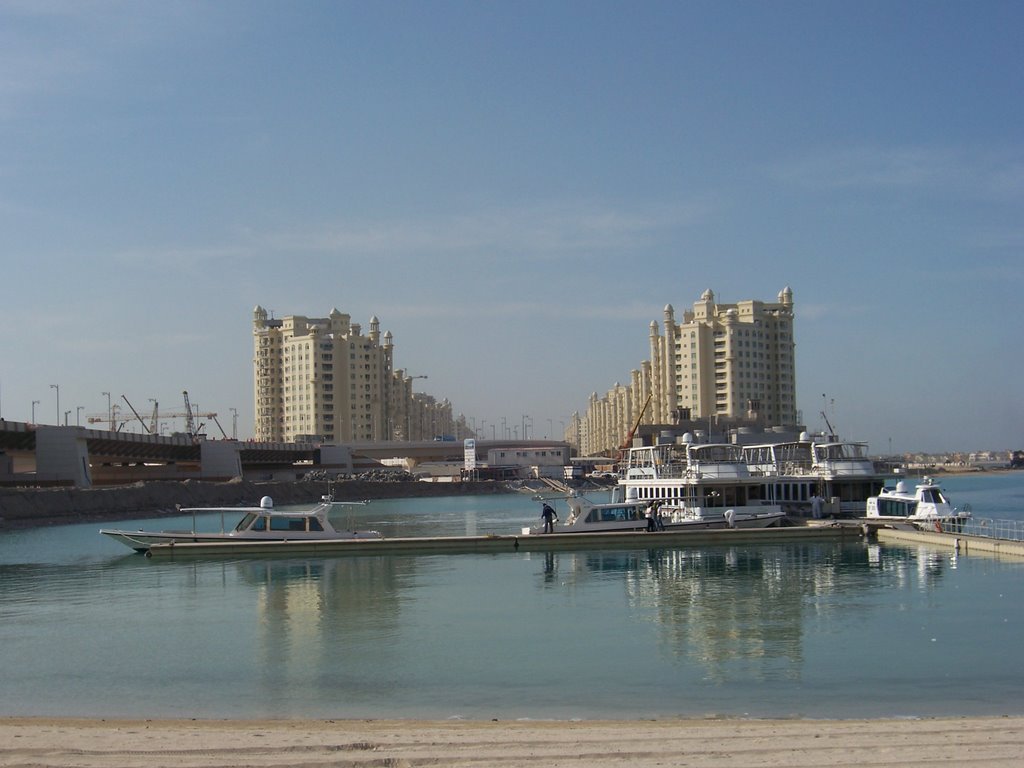 Sheik Muhammad and his people have created in a few short years an amazing edifice to modern culture. Jebal Ali port is one of the world’s busiest and most modern ports. This port is run by the same people who were deemed by Congress, in its wisdom, of being incapable of running American ports. There are modern hotels and office buildings going up everywhere. It is said that over 25% of the world’s construction cranes are currently in Dubai. (The rest are probably in Shanghai.) Tiger Woods is planning to build a golf resort here. (As if the place needs another golf course. There are at present 7 golf courses here that have been carved out of the desert.) Currently the World Shopping Festival is going on with pavilions from all parts of the world. Combine this with the world’s largest duty free store (a shopaholic’s delight) and you may have an apocalyptic scenario
  for a husband on a budget. They are planning and constructing a major financial center that is designed to rival those in London and New York. All of the big financial firms, Morgan Stanley, Goldman Sachs, Citi etc. are opening offices here. No one seems to mind that many of the principal executives of these firms are Jewish. (Who says Muslims and Jews can’t get along? Let’s all make money together.) They are in the middle of a “world’s tallest building” contest with China. They have slowed down construction of the building to see how high the building in Shanghai will be so they can build their building taller. There is also a local competitor who is waiting to start their building to see how tall the current one will be. (“I can build my building taller than yours” is the motto) Dubai has also been described as Las Vegas on steroids. Many would not necessarily view that as a positive model for growth in the U.S. However, if this is what a group of Muslims can create in a short period of time, Congressman Goode should be careful what he wishes for, he might just get it.
Friday, December 22, 2006
O Little Town of Bethlehem
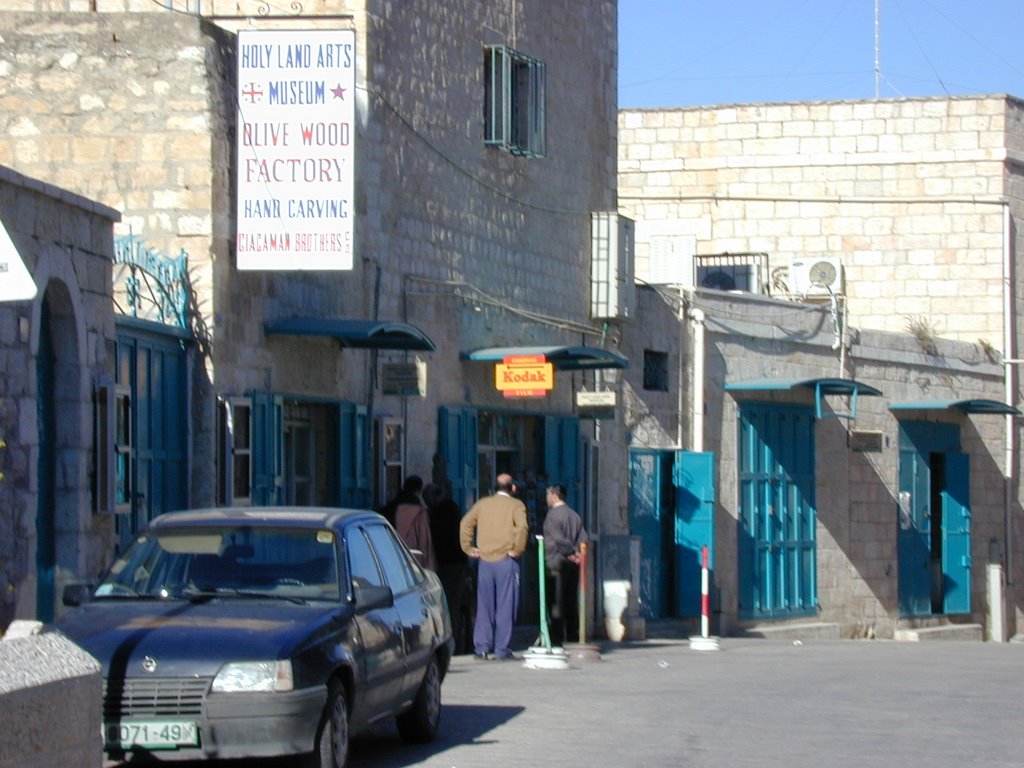
At this time of year when faithful Christians remember a town in the Holy Land where the Gospel writers place the birth of Jesus and celebrate God's presence with humanity, it might be well to also remember the real Palestinian city that exists today on the occupied West Bank. A recent two country survey revealed large gaps between the perceptions of most Americans and the reality on the ground. Almost sixty percent of Americans believe that Bethlehem is in Israel and that its population is Israeli rather than the reality that Bethlehem is on the occupied West Bank and is populated by Arabs, a mix of Christians and Muslims. (to see the entire poll results, click here) As I struggled to write something appropriate at this time of year about the situation in Bethlehem, I was saved by a friend in Colorado who wrote the following column for the local paper:
Rich Mayfield wrote:
Although I’m no longer in the business, I still find myself planning the Christmas Eve worship service for an imaginary congregation. Christmas Eve is particularly vexing for pastors, priests and other worship planners as they seek to somehow extrapolate the church’s ancient message from its current commercialized morass. Trying to tell the tale of a displaced couple living in an occupied territory, temporarily homeless, decidedly pregnant and totally dependent on the kindness of strangers is a challenge on the best of days. Any preacher prepared to proclaim the social injustices inherent in this story, mythological or not, should also be ready for the antipathetic aftershocks from their tradition-demanding congregation. Sentimentality is synonymous with this time and woe to the man or woman who points to the corollaries between the unjust then and the unjust now.
Several years ago, during a December Sunday worship service, a young man, nicely dressed and of a swarthy complexion, asked if he could address the congregation. Control freak that I am, I found myself caught between the poles of self-proclaimed hospitality and self-protecting jurisdiction. Acquiescing toward the former, I pretended to be at ease and invited the gentleman forward.
He quietly introduced himself as a Palestinian from the town of Bethlehem traveling through the United States and then he said, “I bring you sad tidings of great sorrow…” He went on to describe the current conditions in his hometown; the lack of jobs and its accompanying poverty, the despair in the hearts of many and the growing violence among the young. He portrayed a less than “little town” that was anything but a place for “deep and dreamless” sleeping. Random rocket fire, illegal search and seizures, the destruction of ancient family homes, made Bethlehem a place with little hope and lots of fears.
That was three years ago. Life in Bethlehem has only grown worse, unimaginably, much worse. In a news release this week, the mayor of Bethlehem, Dr. Victor Batarseh, described the current situation: “(There is) a rise in the rate of unemployment, reaching 65 percent and all are living under the poverty line as a result. Thousands of students can no longer reach their schools as the Wall and settlement roads prohibit them, and more still cannot reach Bethlehem University in the heart of Bethlehem. Hospitals are now unreachable for many in the District as they are trapped in the ghettos that checkpoints, the Wall and its gate system have created. The Mayor joked bitterly that "Santa Claus will not make it to Bethlehem this year." The 50,000 dollars approved by the Palestinian government for Christmas celebrations in Bethlehem, for decorations and beautification, has not yet reached the city, despite being told that the funds had been deposited into the municipality's bank account.”
Anyone remotely familiar with the current condition of Bethlehem will find the singing of sentimentalized accounts of Jesus’ birth amidst a setting of angelic harmony and goodwill for all difficult if not impossible to intone. This year especially, Christians should hearken back to the warning of an ancient prophet, “They have healed the wound of my people lightly, saying, “Peace, peace, when there is not peace.”
I once hosted, for just a day, a Lutheran pastor from Bethlehem. He was a Palestinian who had beaten the odds against his countrymen by earning a Ph.D. from a prestigious university. He was a brilliant scholar who could be teaching in any number of academic settings. Instead he chose to return to the place of his birth, the traditional place of Jesus’ birth, where he has fought the overwhelming odds and managed not only to ply his pastoral trade in a vibrant congregation but has built a school for Palestinians, both Muslim and Christian, formed an institute for cultural understanding, a college for higher education, a wellness center and more. (www.mitriraheb.org)
We spent our time discussing the deep theological issues as well as our own personal ones. We commiserated over the similar problems we shared as parish pastors, laughing over some and soberly nodding over others. I was deeply impressed by his commitment both to providing opportunities for his people and seeking peace for the world. When the day was over, he got on a plane to Palestine and I drove back up to my home in the tranquil and beautiful mountains. On occasion, I hear of his activities back in his hometown. He’s been harassed and hassled by the authorities. His office and home have been occupied and vandalized. His work has been interrupted by official sanctions and unofficial threats. This is life in Bethlehem these days.
I wonder what hymns he will choose for his congregation to sing tomorrow night?
As we pray for "peace on earth good will toward men" (and women), it might be appropriate to also pray for the real Bethlehem as well as the Bethlehem of legend.
Merry Christmas to all and to all a good night.
Wednesday, December 20, 2006
Proxy War II or how to create a civil war
For the past several months there has been an ongoing debate in Washington as to whether or not there is a civil war in Iraq. The violent struggle for power between various factions in Iraq probably meets the dictionary definition of “war between geographic or political factions of the same country”. Since we were so successful in creating a civil war in Iraq, it seems that we have turned our attentions elsewhere. This summer in our proxy war with Iran in Lebanon we succeeded in creating conditions for a civil war there. Two for two; lets try for a hat trick in the Palestinian territories. We can have another proxy war with Iran and in the process create a civil war between Hamas and Fatah. Since Hamas won the parliamentary elections earlier this year, US policy has been to isolate the elected government of Hamas and support President Mahmoud Abbas and his Fatah party. Political support for Fatah from the west did not succeed in driving Hamas from the government so we are upping the ante. The Bush administration has recently asked Congress for tens of millions of dollars to provide arms to the Fatah security forces/militias in the growing conflict with Hamas security forces. (This seems a little odd since it has been the armed wings of Fatah who have carried out the attacks on Israel in the past year) At the same time Iran has committed to support the Hamas militias. (Proxy War II – In this case only Palestinians get to die.) We are also working with Jordan to bring the Badr Brigade from Jordan to the Palestinian territories. The Badr Brigade is a Jordanian trained army affiliated with Fatah and its return would shift the balance of power in favor of Fatah. The conditions are certainly right in Gaza for a Palestinian civil war. Amira Haas, a Haaretz correspondent who is a daughter of Holocaust survivors and the only Jewish Israeli journalist to live in the Palestinian Territories, recently wrote these troubling words. “The experiment was a success: The Palestinians are killing each other. They are behaving as expected at the end of the extended experiment called ‘what happens when you imprison 1.3 million human beings in an enclosed space like battery hens.’” (To see then entire article click here)
Thursday, December 14, 2006
Ignoring advice
Three years ago after a trip to Jordan to help build a house with Habitat for Humanity International, I was touring the sights of Jordan with a guide who had attended college in Baghdad during the regime of Sadaam Hussein. Sami and I were discussing the Iraq war and its impact. This was a time when almost everybody, including myself, felt that we were making progress toward a democratic Iraqi state that would be a positive force for a more peaceful Middle East. Sami’s reaction was that Sadaam Hussein was a really bad guy and the Middle East was better off without him, but the Iraqis should have done it themselves. He said “you guys have no idea what you are getting into. There are 1300 different ethnic, sectarian, tribal and political groups in Iraq. Without a really strong leader there isn’t a country there.” How prescient he was. The concept of a “nation state” is very much a western concept. In the Middle East people relate much more to the umma (the Muslim community) and to their tribe. When Gertrude Bell drew the lines in the Middle East after WW I, she not only brought the western idea of a nation state and the political and imperialist expectations of the victors to the process, but also a very British penchant for straight lines. Although she understood the area better than almost anybody else, she ended up with Arabs, Kurds, Persians, Sunni, Shia, Christians, Druze etc. scattered among the countries of the region. It makes the Balkans look like a unified society. The Iraq Study Group seemed to implicitly recognize this reality by inserting this caveat after they opposed devolution of Iraq into three regions – “…if events were to move irreversibly in this direction (i.e. devolution), the United States should manage the situation to ameliorate humanitarian consequences, contain the spread of violence and minimize regional instability.” In the recent election the American people expressed strongly that they weren’t satisfied with our policy in Iraq. Since satisfaction is the difference between expectations and reality, George Bush seems to have decided that it is better to improve satisfaction by lowering expectations than by changing the reality. We have come down from defining success as a “free and democratic Iraq that is an ally in the ‘war on terror’ and model for the ‘new Middle East’” to an Iraq that “can govern itself, sustain itself and defend itself”. The Iraq Study Group has made a number of suggestions about how to improve the reality on the ground, but George Bush appears to be about to ignore most of them. He would not be the first recent President to ignore the recommendations of bi-partisan study group designed to give him political cover for difficult decisions. In 1998 President Clinton appointed a bi-partisan commission headed by moderate Louisiana Senator John Breaux to recommend changes necessary to prevent the bankruptcy of the Medicare program. When the commission issued its report, he proceeded to ignore the whole thing. I’ll grant that Bill Clinton was a little preoccupied with Monica at the time, but he might have done something with it. Even though George Bush doesn’t appear to have an intern problem, he is probably going cherry pick a few recommendations and call it good and end up “staying course”. Since he doesn’t have to check this out with the American people at the ballot box, he is likely to show his usual stubbornness. His Republican supporters who do have to run again may start heading for the exits. Meanwhile, while the politicians dither, America’s sons and daughters are still dying to try and create a reality that may not exist.
Tuesday, December 05, 2006
Crossing over
A year ago Secretary of State Condeleeza Rice announced with much fanfare the negotiation of an agreement between the Palestinian Authority and the Israel government regarding the operation of border crossings between Gaza, Israel and Egypt. The agreement was designed to allow commerce between Gaza and its neighbors while addressing Israeli security concerns. Surprisingly the UN has gone back and looked to see what has actually happened in the past year. Here are their conclusions:
AMA Provisions/Progress
1. Rafah will operate as soon as it is ready to operate at an international standard with a target date of 25 November 2005. - The crossing opened on 25 November and operated almost daily in the presence of international observers until 25 June. Since this time it has been closed by the Israeli authorities on 86% of days due to security reasons.
2. Rafah will also be used for the export of goods. - Rafah has not opened for the export of goods.
3 The passages will operate continuously and … the number of export trucks per day processed though Karni will reach … 400 by the end of 2006. - Karni crossing operations improved during the first two months of the AMA but since 15 January Karni has opened erratically, negatively impacting the import of humanitarian aid and commercial trade. The number of exported trucks have averaged 12 per day in 2006.
4 Israel will permit the export of all agricultural products from Gaza during the 2005 harvest season… Israel will ensure the continued opportunity to export - Less than 4% of the harvest was exported. In relation to the operation of other crossing points: (1) No progress has been made towards opening Kerem Shalom crossing for commercial traffic as the PA object to its use as it is wholly located in Israel; and (2) Work on the Erez commercial crossing is due to be completed at the end of 2006 although operating procedures have not been discussed.
5. Israel will allow the passage of convoys to facilitate the movements of goods and persons between Gaza and the West Bank. - These have not been permitted by Israeli authorities and no talks have been initiated on this subject between the GoI and PA as required under the AMA.
6. Consistent with security needs Israel will facilitate the movement of people and goods within the West Bank and minimize disruption to Palestinian lives. - The number of physical obstacles to movement has increased by 44%; in the West Bank. Further restrictions to movement have been imposed on individuals through the extension of the permit system.
7. Gaza seaport construction can start. The GoI will undertake to assure donors that it will not interfere with the operation of the port.- The GoI has not given assurances to donors and no work has started on the construction of the seaport.
8. Discussions will continue on the issues of security arrangements, construction and operation of an airport in the Gaza Strip.- Discussions ceased
(To see the entire report click here)
It is easy to sit in the comfort of your office in Ramallah, Jerusalem, Washington DC or Hailey, Idaho and say “this is terrible” or “this is a result of security concerns”. It is harder to have a detached viewpoint when you are sitting at the Rafah crossing waiting with your 2 year old to enter Gaza. Laila al Haddad, a Harvard educated, Palestinian from Gaza, who currently lives in North Carolina, writes this in her blog about her time at the Rafah checkpoint. (Her Al Jazeera article on this is here)
what do I tell a two-year-old?
He keeps asking me about the border. Yousuf, I mean. He overhears things, ma3bar this and ma3bar that…and so naturally inquisitive, he asks what we are doing and why are we still here and each question if followed by another and another..
“Mama can I ask you something?”
“Anything, my love”
“Why are we still here, in Arish?”
“Because we are waiting to enter Gaza, dear”
“But then why don’t we go to Gaza?
Because the ma3bar is closed, my love.
“Why is it still closed??”
[silence]
“Mommy why is still closed?”
“I don’t know.” I know my, dear, but do you really want to know? Do you really need to know?
“Well who’s closing it mommy?”
What do I tell him? “Some bad people.”
“You mean like in the stories, like Sheer Khan in the Jungle Book?”
“Yes, sure, like Sheer Khan.”
“But who are they? Who are these bad people? Is it the yahood?” He asks, mimicking what he’s heard on the border.
What do I say? I hesitate. “Look, there are some people; some are good, some are bad. And the bad ones are closing the border.
"But why? What did we do?
I wish I knew, my dear. I wish I had all the answers, my love, so I could answer all your questions. I wish I didn’t have to answer such questions to start with. But now I do, and what can I say to you?
“Mommy, please tell them to open it.”
“I tried, my dear.”
“Try harder. Try again. Tell them again. Please, tell them ‘Yousuf wants to enter Gaza’.”And so it goes:
Dear Mr. Peretz: My son Yousuf, 2 years and 9 months, would like me to inform you that he wants
to enter Gaza. He has asked me to tell whoever it is who is keeping it closed to open the border for him immediately. In fact, he asks me everyday. And now, asking is no long sufficient: he wants answers, too. Why is the border still closed? And who is keeping it closed and why? So, in addition to asking you to open the border, I am also writing to ask you what I can tell a 2 year old to satisfy his insatiable curiosity. What can I tell him of borders and occupation and oppression and collective punishment? What would YOU tell him? Lying doesn’t work-2 year olds are like natural born lie detectors. And so he figures it’s the bad guy-like in the stories that we all read growing up. And now, he demands to know who the bad guy is. What do I tell a 2 year old, Mr. Peretz, about the bad guy who won’t let him return home?
A Palestinian mother
(To see her blog site click here)
Maybe George Bush, Israeli Prime Minister Ehud Omert, and PA Prime Minister Ishmail Haniya and all of us should go to Rafah and explain it Yousef.
Israel
Palestine
Gaza
AMA Provisions/Progress
1. Rafah will operate as soon as it is ready to operate at an international standard with a target date of 25 November 2005. - The crossing opened on 25 November and operated almost daily in the presence of international observers until 25 June. Since this time it has been closed by the Israeli authorities on 86% of days due to security reasons.
2. Rafah will also be used for the export of goods. - Rafah has not opened for the export of goods.
3 The passages will operate continuously and … the number of export trucks per day processed though Karni will reach … 400 by the end of 2006. - Karni crossing operations improved during the first two months of the AMA but since 15 January Karni has opened erratically, negatively impacting the import of humanitarian aid and commercial trade. The number of exported trucks have averaged 12 per day in 2006.
4 Israel will permit the export of all agricultural products from Gaza during the 2005 harvest season… Israel will ensure the continued opportunity to export - Less than 4% of the harvest was exported. In relation to the operation of other crossing points: (1) No progress has been made towards opening Kerem Shalom crossing for commercial traffic as the PA object to its use as it is wholly located in Israel; and (2) Work on the Erez commercial crossing is due to be completed at the end of 2006 although operating procedures have not been discussed.
5. Israel will allow the passage of convoys to facilitate the movements of goods and persons between Gaza and the West Bank. - These have not been permitted by Israeli authorities and no talks have been initiated on this subject between the GoI and PA as required under the AMA.
6. Consistent with security needs Israel will facilitate the movement of people and goods within the West Bank and minimize disruption to Palestinian lives. - The number of physical obstacles to movement has increased by 44%; in the West Bank. Further restrictions to movement have been imposed on individuals through the extension of the permit system.
7. Gaza seaport construction can start. The GoI will undertake to assure donors that it will not interfere with the operation of the port.- The GoI has not given assurances to donors and no work has started on the construction of the seaport.
8. Discussions will continue on the issues of security arrangements, construction and operation of an airport in the Gaza Strip.- Discussions ceased
(To see the entire report click here)
It is easy to sit in the comfort of your office in Ramallah, Jerusalem, Washington DC or Hailey, Idaho and say “this is terrible” or “this is a result of security concerns”. It is harder to have a detached viewpoint when you are sitting at the Rafah crossing waiting with your 2 year old to enter Gaza. Laila al Haddad, a Harvard educated, Palestinian from Gaza, who currently lives in North Carolina, writes this in her blog about her time at the Rafah checkpoint. (Her Al Jazeera article on this is here)
what do I tell a two-year-old?
He keeps asking me about the border. Yousuf, I mean. He overhears things, ma3bar this and ma3bar that…and so naturally inquisitive, he asks what we are doing and why are we still here and each question if followed by another and another..
“Mama can I ask you something?”
“Anything, my love”
“Why are we still here, in Arish?”
“Because we are waiting to enter Gaza, dear”
“But then why don’t we go to Gaza?
Because the ma3bar is closed, my love.
“Why is it still closed??”
[silence]
“Mommy why is still closed?”
“I don’t know.” I know my, dear, but do you really want to know? Do you really need to know?
“Well who’s closing it mommy?”
What do I tell him? “Some bad people.”
“You mean like in the stories, like Sheer Khan in the Jungle Book?”
“Yes, sure, like Sheer Khan.”
“But who are they? Who are these bad people? Is it the yahood?” He asks, mimicking what he’s heard on the border.
What do I say? I hesitate. “Look, there are some people; some are good, some are bad. And the bad ones are closing the border.
"But why? What did we do?
I wish I knew, my dear. I wish I had all the answers, my love, so I could answer all your questions. I wish I didn’t have to answer such questions to start with. But now I do, and what can I say to you?
“Mommy, please tell them to open it.”
“I tried, my dear.”
“Try harder. Try again. Tell them again. Please, tell them ‘Yousuf wants to enter Gaza’.”And so it goes:
Dear Mr. Peretz: My son Yousuf, 2 years and 9 months, would like me to inform you that he wants
to enter Gaza. He has asked me to tell whoever it is who is keeping it closed to open the border for him immediately. In fact, he asks me everyday. And now, asking is no long sufficient: he wants answers, too. Why is the border still closed? And who is keeping it closed and why? So, in addition to asking you to open the border, I am also writing to ask you what I can tell a 2 year old to satisfy his insatiable curiosity. What can I tell him of borders and occupation and oppression and collective punishment? What would YOU tell him? Lying doesn’t work-2 year olds are like natural born lie detectors. And so he figures it’s the bad guy-like in the stories that we all read growing up. And now, he demands to know who the bad guy is. What do I tell a 2 year old, Mr. Peretz, about the bad guy who won’t let him return home?
A Palestinian mother
(To see her blog site click here)
Maybe George Bush, Israeli Prime Minister Ehud Omert, and PA Prime Minister Ishmail Haniya and all of us should go to Rafah and explain it Yousef.
Israel
Palestine
Gaza
Wednesday, November 29, 2006
What's happening 2
Last week I, along with some of my interested friends, were surprised to see a prominent article in the NY Times regarding illegal (under Israeli law) confiscation of Palestinian lands for settlements on the West Bank and in East Jerusalem. It is not normal to see this type of frank discussion of the issues in the Israeli/Palestinian conflict in the American media. This week the release of Former President Jimmy Carter’s new book “Palestine – Peace not Apartheid” has also provoked a surprisingly open debate on the nature of the conflict. Clearly his intentional use of the “A” word and his high profile status have contributed to the discussion. As he points out this kind of open debate is common in Israel and Europe, but is almost non existent in the US and it was his intention to be provocative in order to encourage discussion. Some major media outlets, namely the NY Times and the Wall Street Journal, have managed to miss the story, but other major outlets have picked up on it and a lively debate has ensued. National Public Radio, ABC’s Good Morning America and Public Broadcasting’s News Hour interviewed President Carter. (To see the PBS interview click here) The Atlanta Journal Constitution published a lengthy op-ed piece by John Dugard and predictably Harvard professor Alan Dershewitz weighed in on right wing website Front Page Magazine. Mr. Dugard points out that President Carter walks very softly in his comparisons of the Israel/Palestinian situation to South Africa’s apartheid system. Even so it didn’t take long for Democratic Party leaders like Nancy Pelosi to disavow that she even knew this guy Jimmy Carter. It is much easier for politicians to take on the Jewish/Israeli lobby after they have retired. Republican Congressman Henry Hyde did not get around to writing President Bush about the treatment of Palestinian Christians until after he had decided to retire. Although I have been critical of the actions and inactions of the Bush administration in the Middle East, you can see from the following quotes assembled by Churches for Middle East Peace they have been pretty forceful in criticizing Israeli behavior in the occupied territories.
President George W. Bush
“As I have stated in the past, achieving peace demands action from all parties. Israel must continue to work with Palestinian leaders to help improve the daily lives of Palestinians. At the same time, Israel should not undertake any activity that contravenes its road map obligations, or prejudices the final status negotiations with regard to Gaza, the West Bank, and Jerusalem. This means that Israel must remove unauthorized posts and stop settlement expansion. It also means that the barrier now being built to protect Israelis from terrorist attacks must be a security barrier, rather than a political barrier. Israeli leaders must take into account the impact this security barrier has on Palestinians not engaged in terrorist activities.” October 20, 2005, Press Conference with President Abbas
“Israel must continue to take steps toward a peaceful future, and work with the Palestinian leadership to improve the daily lives of Palestinians, especially their humanitarian situation. Israel should not undertake any activity that contravenes road map obligations or prejudice final status negotiations with regard to Gaza, the West Bank and Jerusalem. Any final status agreement must be reached between the two parties, and changes to the 1949 Armistice lines must be mutually agreed to." May 26, 2005 Press conference with President Abbas
Condoleezza Rice, Secretary of State
“We have been very clear about the Israeli obligations under the Roadmap not to try and do anything that will prejudge a final status outcome. We’ve expressed our deep concern about the route of the wall particularly around Jerusalem and we have expressed the American policy on settlement activity remains that it should stop. We will continue to work towards exactly that.” July 23, 2005,
Press Conference with President Abbas
“I traveled to Ramallah and I saw your [settlement] construction with my own eyes. It is not possible to operate in the territories in a manner that will change the situation before discussions on final status. True, the president promised the prime minister to consider the realities on the ground and concentrations of population--this is very important and the United States stands behind this commitment. But the president added that it is clear to all sides that the final borders will be determined only through negotiation. We cannot sanction creating a new reality on the ground by actions that continue today. I mean by this those activities in Jerusalem and its environs meant to change the reality on the ground. I saw these things with my own eyes and I am very concerned. “We want very much to support Israel in this critical period, and we recognize the sensitivity of the situation, but it is impossible to sanction the continuation of construction and its influence on the final border. This is very important to us. I traveled close to Ma’ale Adumim, and I saw the construction along the way.” Conversation with Israeli foreign minister Silvan Shalom, as reported in Ma’ariv, June 26, 2005
“Now, our position on settlement activity has not changed. We have said to the Israelis that they have obligations under the roadmap, they have obligations not to increase settlement activity. We expect, in particular, that they are going to be careful about anything -- route of the fence, settlement activity, laws -- that would appear to prejudge a final status agreement, and it's concerning that this is where it is and around Jerusalem. But we've noted our concern to the Israelis -- and David Welch and Elliott did. We will continue to note that this is at odds with the -- of American policy. So full stop we will continue to do that and we have noted our concerns about it.” March 24, 2005 Interview with LA Times
The key here is that we have ahead of us a Roadmap; we have ahead of us a way toward the vision of two states living side by side. We have been very clear that we would expect our friends in Israel to do nothing that would somehow prejudge the outcome of a final status agreement in terms of territory, that this is something that really must be negotiated with the Palestinians. February 6, 2005 Interview With Udi Segal of Israel TV Channel 2
The problem has been that words have not translated into action. President Bush has always said that he is a man of action. Maybe the more open debate that seems to be happening will prompt some action. Let’s hope so.
Israel
Palestine
President George W. Bush
“As I have stated in the past, achieving peace demands action from all parties. Israel must continue to work with Palestinian leaders to help improve the daily lives of Palestinians. At the same time, Israel should not undertake any activity that contravenes its road map obligations, or prejudices the final status negotiations with regard to Gaza, the West Bank, and Jerusalem. This means that Israel must remove unauthorized posts and stop settlement expansion. It also means that the barrier now being built to protect Israelis from terrorist attacks must be a security barrier, rather than a political barrier. Israeli leaders must take into account the impact this security barrier has on Palestinians not engaged in terrorist activities.” October 20, 2005, Press Conference with President Abbas
“Israel must continue to take steps toward a peaceful future, and work with the Palestinian leadership to improve the daily lives of Palestinians, especially their humanitarian situation. Israel should not undertake any activity that contravenes road map obligations or prejudice final status negotiations with regard to Gaza, the West Bank and Jerusalem. Any final status agreement must be reached between the two parties, and changes to the 1949 Armistice lines must be mutually agreed to." May 26, 2005 Press conference with President Abbas
Condoleezza Rice, Secretary of State
“We have been very clear about the Israeli obligations under the Roadmap not to try and do anything that will prejudge a final status outcome. We’ve expressed our deep concern about the route of the wall particularly around Jerusalem and we have expressed the American policy on settlement activity remains that it should stop. We will continue to work towards exactly that.” July 23, 2005,
Press Conference with President Abbas
“I traveled to Ramallah and I saw your [settlement] construction with my own eyes. It is not possible to operate in the territories in a manner that will change the situation before discussions on final status. True, the president promised the prime minister to consider the realities on the ground and concentrations of population--this is very important and the United States stands behind this commitment. But the president added that it is clear to all sides that the final borders will be determined only through negotiation. We cannot sanction creating a new reality on the ground by actions that continue today. I mean by this those activities in Jerusalem and its environs meant to change the reality on the ground. I saw these things with my own eyes and I am very concerned. “We want very much to support Israel in this critical period, and we recognize the sensitivity of the situation, but it is impossible to sanction the continuation of construction and its influence on the final border. This is very important to us. I traveled close to Ma’ale Adumim, and I saw the construction along the way.” Conversation with Israeli foreign minister Silvan Shalom, as reported in Ma’ariv, June 26, 2005
“Now, our position on settlement activity has not changed. We have said to the Israelis that they have obligations under the roadmap, they have obligations not to increase settlement activity. We expect, in particular, that they are going to be careful about anything -- route of the fence, settlement activity, laws -- that would appear to prejudge a final status agreement, and it's concerning that this is where it is and around Jerusalem. But we've noted our concern to the Israelis -- and David Welch and Elliott did. We will continue to note that this is at odds with the -- of American policy. So full stop we will continue to do that and we have noted our concerns about it.” March 24, 2005 Interview with LA Times
The key here is that we have ahead of us a Roadmap; we have ahead of us a way toward the vision of two states living side by side. We have been very clear that we would expect our friends in Israel to do nothing that would somehow prejudge the outcome of a final status agreement in terms of territory, that this is something that really must be negotiated with the Palestinians. February 6, 2005 Interview With Udi Segal of Israel TV Channel 2
The problem has been that words have not translated into action. President Bush has always said that he is a man of action. Maybe the more open debate that seems to be happening will prompt some action. Let’s hope so.
Israel
Palestine
Wednesday, November 22, 2006
What's happening?
I was amazed yesterday to read in the NY Times an article on an Israeli government report that was leaked to the Israeli peace advocacy group “Peace Now”. The report documents that 40% of the Israeli settlements on the West Bank are built on Palestinian owned land that was confiscated from its owners. The amazing news wasn’t the contents of the report, (anyone who has spent time talking to Palestinians could tell you that) nor that it was published in the Israeli press. The amazing news was that it made the front page of the NY Times. (Click here to see the entire article) This may put a monkey wrench in the Israeli plans to retain these settlements even after the formation of a Palestinian state.
Birth Pangs
During the Israeli-Lebanese war this summer Secretary of State Condeleeza Rice famously (or infamously) described the war as the “birth pangs of the new Middle East”. It is hard to understand how an event that killed over 1000 Lebanese and Israelis and only succeeded in strengthening the position of Hezbollah, Hamas, Syria and Iran can be written off in this flippant statement. However, if we want to see “birth pangs of a new Middle East” a war with Iran will get that done. The Lebanese/Israeli war would be mild labor pains compared to the pain of a war with Iran. In addition to massive casualties, it is easy to envision $100 per barrel oil, $4.00 per gallon gasoline, a regional Middle East conflict and a worldwide recession or depression out of such a conflict. It appears, however, that such a conflict is still on the radar screen. An upcoming article in the New Yorker magazine describes debate among U.S. and Israeli government leaders of all political persuasions on how to justify such a war. (To see the complete article click here) In a recent Jordan Times op-ed piece, James Zogby, an Arab American businessman, discussed a conference held by the U.S. State Department with State Department and Arab American leaders. (To see the complete article click here) This conference was the first of its kind under the current administration. They were periodically held in this format under the Clinton administration, but the Bush administration changed them to Middle East conferences and only invited their friends. The purpose of the conference was to facilitate dialogue (some of it was heated) on U. S. Middle East policy and to encourage citizen diplomacy by Arab Americans to explain and sell U.S. policy in the Arab world. The overwhelming response that the State Department got was – you’ve got the cart way before the horse. First you have to have a policy that makes any sense at all to the Arab world before you have any chance of explaining and selling it. I don’t think that a policy of “preemptive attack” on Iran is one that I would want to try and sell.
Tuesday, November 14, 2006
Beit Hanoun
I have been struggling to find away to make sense of the killing of 19 Palestinian civilians from the same family in the town of Beit Hanoun in Gaza by Israeli Defense Forces. After coming up with no answers, I decided to let my Palestinian friends in the West Bank and Gaza speak for themselves. Here is an email that I received last week.
Usama writes:
Dear Friends,
Greetings from Bethlehem. I hope you are well in these days. Here in Bethlehem we are excited to see the weather changing as we begin to make preparations for an exciting winter.Please absorb this poignant email written by a friend of ours who is working in Gaza City. I watched the news from Gaza in my neighbor's house last evening and we saw Ali on the television. It doesn't matter what your politics or religion may be. There is no justification for any of this. Children are being killed every day. When will it be enough?I was struck by the image of the candle. Could you respond in one simple way to this email? Could you, at some point today, light a candle in your own home and say a prayer for all of those who are sitting in the dark silence mourning? Peace to you,
Usama
 This is Beit Hanoun
by Philip Rizk
From the main road the town of Beit Hanoun looks like any other part of Gaza. Cars are driving in and out, although most of them are leaving, going far, far away, but where, I don’t know. There are only 365 km2 to this place called the Gaza Strip and over the past week 80 human beings have been killed in Beit Hanoun.
I entered the town from a back road since the main road was torn up by bulldozers and is inaccessible. At first things seems rather normal, just another bumpy road, one of many in Gaza, but then through the darkness you see, something else. Many homes remain only skeletons with gaping holes staring through walls, streets turned into mud piles, lamp posts are broken like match sticks, the whole place is covered in a semi darkness, there is no electricity in Beit Hanoun. In the midst of all the chaos an electrician is up one of the electricity poles trying to fix something. The stench of sewage fills the air, the Israeli tanks and bulldozers also broke many sewage pipes.
I got to the two homes that had been shelled that morning after the Israeli troops had pulled out of Beit Hanoun. There was an eerie silence in the area. It was dark and quiet. The first home I entered was lit up by a candle, sitting on a counter. Behind it you could see what was once a well kept kitchen, the windows looked expensive, but the huge hole in the wall and the rubble covering the floor let any visitor know something was not right here. I met Ali there. He lost relatives and neighbors. 17 people in total, 13 of them from one family. Ali’s eyes were swollen, I could see the grief in his face, his spirit was broken. A tank shell had gone through the roof of the building he lived in. He escaped unscathed, others were not so fortunate. "Life and death are the same", Ali exclaimed. He explained to me how just days before the Israeli soldiers had occupied the very home which had been shelled that morning. They had been tired and had slept in the beds of the Palestinians who that day were killed in the very same beds. One couple was found dead, lying in their bed, with their young child sleeping in between them. The attack happened at 5:30am. Ali was among the people that fled the scene and fire followed them, to the next building where they tried to take refuge. "What religion allows this?" Why? was the question he kept asking, and the question that goes through my mind still.
Why are we silent?
Mathew Price, the BBC correspondent in Israel/Palestine wrote a moving piece about this tragedy in which he talks about his driver in Gaza:
“How many of your family have you lost, I asked? "All of them. They all had the same grandfather."
"I feel hate," he added. He did not spit it out like people so often do. He just said it. "I hate George W Bush. I hate Israel of course. I hate the Arab world. I hate Europe." His eyes, though, did not say hate. They said pain.” (To see the whole article click here)
Israel
Palestine
Wednesday, November 08, 2006
Thinking about immigration
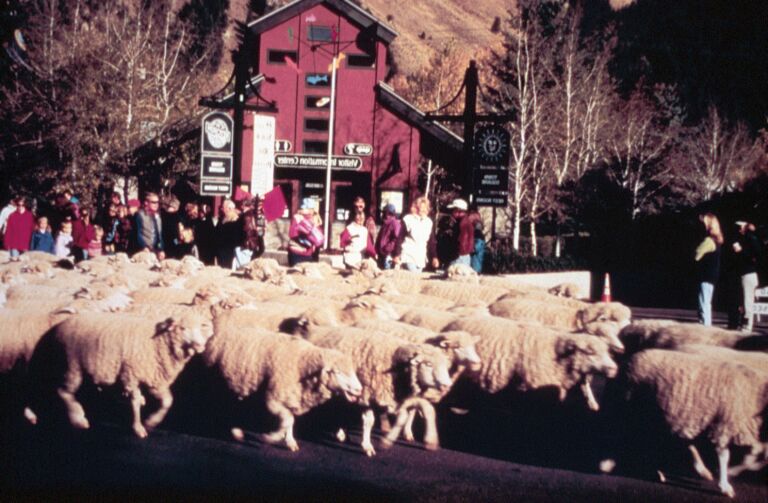
A few weeks ago our small mountain town held what is becoming one of our most popular festivals – “The Trailing of the Sheep”. The festival celebrates the sheep industry in Idaho and its contributions to our state’s history. It also celebrates the contributions that have been made by various ethnic groups who have immigrated to Idaho as part of the sheep industry and have grown to become part of the cultural fabric of the state. This year the focus was on the Basque community from Spain and France. As I listened to a number of first generation Basque immigrants talk about arriving in the U.S. forty years ago unable to speak English and with tears in their eyes praise the ranchers and others in the western U.S. who gave them their first chance, I wondered whether or not today’s immigrants feel as welcome as those of the recent past. When I commented about this to some of my friends they responded “at least they could speak English”. Trouble is – forty years ago they didn’t “speak English”. Today they are successful investment managers, ranchers, restaurant owners, etc. Our community would be a poorer place without their presence. As we struggle to formulate a immigration policy that makes sense in today’s connected world, perhaps we should be thinking “outside the box”. A recent article in Foreign Affairs magazine Immigration Nation by Tamar Jacoby talks about immigration in terms of supply and demand. He argues that the demand for immigrant workers in the U.S. workforce is 1.5mm per year and that this demand is going to be filled by foreign workers with or without legal status. Any effort by the government to repeal the law of supply and demand absent police state tactics of border control, check points, random raids, and mass incarceration is doomed to fail. (Our government does seem to make periodic efforts to repeal the law of supply and demand without much success – witness prohibition) Some have called for the deportation of all immigrants in this country without legal status. The generally accepted number of these undocumented workers is 12 million. By my calculation this would require 250,000 bus loads to get them back to our borders. It would create a heck of a traffic jam at the border. (There might be an investment opportunity in bus companies.) The most recent U.S unemployment number is 6.7mm people. Assuming that all of the unemployed would fill these jobs if we deported all undocumented workers (a highly suspect assumption), we would still be short 5mm workers. The only solution for companies would be to move the jobs to where the people are instead of moving the people to the jobs in the U.S. It seems to me that any successful immigration policy must allow 1.5mm immigrant workers to come to the U.S. each year to fill the demand. If the guest worker program currently being debated does not allow for filling the demand, illegal immigration will continue. Once the demand is filled the immigration supply will dwindle. People won’t come here to be unemployed. If you are going to be unemployed, you might as well stay home and be unemployed. This debate really never got off the ground in the last Congress; perhaps the recent changes of this week’s election will make a difference.
Immigration
Monday, October 30, 2006
Working from the same playbook
In August 2005 the German periodical Der Speigel published an article outlining the points made by Jordanian journalist Fouad Hussein in his book “Al Zarqawi – The Second Generation of Al Qaeda”. Hussein is known for his contacts with senior Al Qaeda leaders and his ability to have them be open with him. He spent time in a Jordanian prison with Al Zarqawi. In the book he outlines Al Qaeda’s strategy for establishing an Islamic caliphate over a 20 year period. Here is the seven step plan as presented in Der Speigel :
· The First Phase Known as "the awakening" -- this has already been carried out and was supposed to have lasted from 2000 to 2003, or more precisely from the terrorist attacks of September 11, 2001 in New York and Washington to the fall of Baghdad in 2003. The aim of the attacks of 9/11 was to provoke the US into declaring war on the Islamic world and thereby "awakening" Muslims. "The first phase was judged by the strategists and masterminds behind al-Qaeda as very successful," writes Hussein. "The battle field was opened up and the Americans and their allies became a closer and easier target." The terrorist network is also reported as being satisfied that its message can now be heard "everywhere."
· The Second Phase "Opening Eyes" is, according to Hussein's definition, the period we are now in and should last through 2006. Hussein says the terrorists hope to make the western conspiracy aware of the "Islamic community." Hussein believes this is a phase in which al-Qaeda wants an organization to develop into a movement. The network is banking on recruiting young men during this period. Iraq should become the center for all global operations, with an "army" set up there and bases established in other Arabic states.
· The Third Phase This is described as "Arising and Standing Up" and should last from 2007 to 2010. "There will be a focus on Syria," prophesies Hussein, based on what his sources told him. The fighting cadres are supposedly already prepared and some are in Iraq. Attacks on Turkey and -- even more explosive -- in Israel are predicted. Al-Qaeda's masterminds hope that attacks on Israel will help the terrorist group become a recognized organization. The author also believes that countries neighboring Iraq, such as Jordan, are also in danger.
· The Fourth Phase Between 2010 and 2013, Hussein writes that al-Qaeda will aim to bring about the collapse of the hated Arabic governments. The estimate is that "the creeping loss of the regimes' power will lead to a steady growth in strength within al-Qaeda." At the same time attacks will be carried out against oil suppliers and the US economy will be targeted using cyber terrorism.
· The Fifth Phase This will be the point at which an Islamic state, or caliphate, can be declared. The plan is that by this time, between 2013 and 2016, Western influence in the Islamic world will be so reduced and Israel weakened so much, that resistance will not be feared. Al-Qaeda hopes that by then the Islamic state will be able to bring about a new world order.
· The Sixth Phase Hussein believes that from 2016 onwards there will be a period of "total confrontation." As soon as the caliphate has been declared the "Islamic army" it will instigate the "fight between the believers and the non-believers" which has so often been predicted by Osama bin Laden.
· The Seventh Phase This final stage is described as "definitive victory." Hussein writes that in the terrorists' eyes, because the rest of the world will be so beaten down by the "one-and-a-half million Muslims", the caliphate will undoubtedly succeed. This phase should be completed by 2020, although the war shouldn't last longer than two years.
The key to this plan according to Hussein is dragging the US into conflict with Iran; overextending its forces and creating chaos in the oil markets and thus disrupting western economies. I assume that the US government has read this play book. It doesn’t mean that we have to follow it. So far, however, we are pretty much on schedule. Al Qaeda has a plan. Do we?
Middle East
Al Qaeda
· The First Phase Known as "the awakening" -- this has already been carried out and was supposed to have lasted from 2000 to 2003, or more precisely from the terrorist attacks of September 11, 2001 in New York and Washington to the fall of Baghdad in 2003. The aim of the attacks of 9/11 was to provoke the US into declaring war on the Islamic world and thereby "awakening" Muslims. "The first phase was judged by the strategists and masterminds behind al-Qaeda as very successful," writes Hussein. "The battle field was opened up and the Americans and their allies became a closer and easier target." The terrorist network is also reported as being satisfied that its message can now be heard "everywhere."
· The Second Phase "Opening Eyes" is, according to Hussein's definition, the period we are now in and should last through 2006. Hussein says the terrorists hope to make the western conspiracy aware of the "Islamic community." Hussein believes this is a phase in which al-Qaeda wants an organization to develop into a movement. The network is banking on recruiting young men during this period. Iraq should become the center for all global operations, with an "army" set up there and bases established in other Arabic states.
· The Third Phase This is described as "Arising and Standing Up" and should last from 2007 to 2010. "There will be a focus on Syria," prophesies Hussein, based on what his sources told him. The fighting cadres are supposedly already prepared and some are in Iraq. Attacks on Turkey and -- even more explosive -- in Israel are predicted. Al-Qaeda's masterminds hope that attacks on Israel will help the terrorist group become a recognized organization. The author also believes that countries neighboring Iraq, such as Jordan, are also in danger.
· The Fourth Phase Between 2010 and 2013, Hussein writes that al-Qaeda will aim to bring about the collapse of the hated Arabic governments. The estimate is that "the creeping loss of the regimes' power will lead to a steady growth in strength within al-Qaeda." At the same time attacks will be carried out against oil suppliers and the US economy will be targeted using cyber terrorism.
· The Fifth Phase This will be the point at which an Islamic state, or caliphate, can be declared. The plan is that by this time, between 2013 and 2016, Western influence in the Islamic world will be so reduced and Israel weakened so much, that resistance will not be feared. Al-Qaeda hopes that by then the Islamic state will be able to bring about a new world order.
· The Sixth Phase Hussein believes that from 2016 onwards there will be a period of "total confrontation." As soon as the caliphate has been declared the "Islamic army" it will instigate the "fight between the believers and the non-believers" which has so often been predicted by Osama bin Laden.
· The Seventh Phase This final stage is described as "definitive victory." Hussein writes that in the terrorists' eyes, because the rest of the world will be so beaten down by the "one-and-a-half million Muslims", the caliphate will undoubtedly succeed. This phase should be completed by 2020, although the war shouldn't last longer than two years.
The key to this plan according to Hussein is dragging the US into conflict with Iran; overextending its forces and creating chaos in the oil markets and thus disrupting western economies. I assume that the US government has read this play book. It doesn’t mean that we have to follow it. So far, however, we are pretty much on schedule. Al Qaeda has a plan. Do we?
Middle East
Al Qaeda
Wednesday, October 25, 2006
Water, water nowhere
Frequently the conflicts in the Middle East are portrayed as religious conflicts; conflicts between Jews and Muslims, Muslims and Christians, Sunni and Shia etc. Although many of the conflicts certainly have a religious component, I would argue that they are more about competing claims for political and economic power, land, oil and water. As a resident of the arid mountain western United States, the water component certainly resonates with me. As we flew over the region on our first trip to Jordan, Marcia commented “I wonder why anyone wants to fight over this desolate piece of desert”. It seems to me that it looks a lot like southern Idaho. Four years ago when we were in Northern Jordan along the Syrian border, there was discussion about a Jordanian – Syrian plan to build a dam on the Yarmouk River which forms the Jordanian/Syrian border and is the primary tributary of the Jordan River. This plan seems to have legs as last week environmentalists were complaining in a Haaretz article that this would dry up the Jordan River. They are probably right. As you can 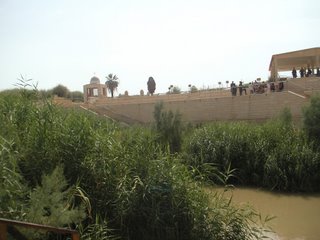 see from this picture taken at the legendary baptismal site of Jesus, the Jordan is no longer the rushing river of our Sunday school images. The flow is now 10% of its historical level and as it is the primary source of water to the Dead Sea the decrease is causing the Dead Sea to recede 3 feet per year. There is even a plan to build a canal from the Red Sea to the Dead Sea to refill it. As the Jordan River resource is depleted, Israel has become more and more dependent on the Eastern Aquifer on the West Bank for water resources not only for the settlements but also for Israel proper. Of the 46 MCM of water produced by Israeli wells inside the West Bank, 90% is used by the Israelis in the settlements and in Israel. Under Israeli law, Israelis are allowed to drill wells 250 ft deeper than Palestinians. This is conveniently enough to allow the Israelis to reach the aquifer, but not the Palestinians. The separation wall/fence is located so as to insure that access to the aquifer remains on the Israeli side of the barrier. None of this is sustainable by either side as the aquifer is being depleted at a rate higher than its recovery rate. This is a phenomenon familiar to those of us who live in the arid western U.S. Two maxims of the water conflicts in the west are “Water flows uphill towards money” and “Whiskey’s for drinking and water’s for fighting over”. They seem to apply in the Middle East as well.
Israel
Palestine
 see from this picture taken at the legendary baptismal site of Jesus, the Jordan is no longer the rushing river of our Sunday school images. The flow is now 10% of its historical level and as it is the primary source of water to the Dead Sea the decrease is causing the Dead Sea to recede 3 feet per year. There is even a plan to build a canal from the Red Sea to the Dead Sea to refill it. As the Jordan River resource is depleted, Israel has become more and more dependent on the Eastern Aquifer on the West Bank for water resources not only for the settlements but also for Israel proper. Of the 46 MCM of water produced by Israeli wells inside the West Bank, 90% is used by the Israelis in the settlements and in Israel. Under Israeli law, Israelis are allowed to drill wells 250 ft deeper than Palestinians. This is conveniently enough to allow the Israelis to reach the aquifer, but not the Palestinians. The separation wall/fence is located so as to insure that access to the aquifer remains on the Israeli side of the barrier. None of this is sustainable by either side as the aquifer is being depleted at a rate higher than its recovery rate. This is a phenomenon familiar to those of us who live in the arid western U.S. Two maxims of the water conflicts in the west are “Water flows uphill towards money” and “Whiskey’s for drinking and water’s for fighting over”. They seem to apply in the Middle East as well.
Israel
Palestine
Wednesday, October 18, 2006
How to build a better city
One of the thoughts that has stayed with me since my trip to Israel and the West Bank with Palestinians in April is “now I have some idea what it was like to be black in the U.S. in the 1960’s”. This thought came back to me last week when I read an op ed piece in the center left Israeli English language paper Haaretz concerning land planning in Jerusalem. As I was reading the article, I wondered how its point of view would play in the U.S today. Using the miracles of modern technology I did a little editing. With apologies to the good folks of Richmond, Virginia I substituted the words Richmond for Jerusalem, Virginia for Israel, white for Jew and black for Palestinian. This is what I got.
A small Richmond is better
By Moshe Amirav
On October 17, the National Council for Planning and Construction is supposed to discuss a new plan that will change the face of Virginia's capital. At issue is the construction of 20,000 residential units west of Richmond, which will dramatically change the direction of the city's expansion and will weaken it economically and politically. The public uproar surrounding the new plan, which has led to the submission of 15,000 objections, stems from fear that the planning mistake of the 1970s is repeating itself. At that time, Virginia invested huge sums in the construction of about 40,000 residential units in East Richmond. These turned into seven neighborhoods, including Ramot, Gilo and Pisgat Ze'ev, which today house about 180,000 white residents. The plan, which was initiated by Golda Meir's government in order to "strengthen the capital," was severely criticized by all the experts. Thirty years later, its destructive consequences have become evident: From a compact city of 37 square kilometers, Richmomd has turned into a huge metropolis that covers 120 square kilometers, twice as large as the area of Tel Aviv and Haifa combined. Instead of channeling government investments into infrastructure, industry and tourism, they were channeled into the construction of these neighborhoods, which led to the flight of businessmen and the economic elites from the city.
During the past two decades, about 300,000 whites have left the city, most from the middle or upper class. Richmond has turned into the poorest city in Virginia, and today, white neighborhoods comprise only one-third of the city's eastern part. The other two-thirds house about a quarter of a million blacks, who have upended the demographic policy designed to reduce their proportions. The white majority has shrunk to only 66 percent, and there is a fear that in another 20 years, the city will be biracial- half its residents will be black. The idea that a "bigger Richmond" would strengthen the city turned out to be mistaken. A "small Richmomd" is preferable. Now, the National Council for Planning and Construction is about to repeat exactly the same mistake, but the consequences are liable to be far worse. A group of wealthy businessmen and a world-famous architect, Moshe Safdie, have joined forces to convince the municipality and the government that Richmond is not big enough, that it lacks built-up areas, and that 120,000 whites must urgently be brought to it. Here lies the trap of the mistaken idea: There is no need to enlarge the city; just the opposite - it should be made smaller. The solution is to strengthen the downtown area and invest in employment infrastructure, on one hand, and to relinquish the black neighborhoods, on the other. All the studies have proven that these two steps would strengthen the city economically and politically. They would raise the city's economic level from 90th (last) place, where it is now, to a respectable place in the top decile of Virginian cities. They would also increase the city's white majority from 66 percent to 96 percent and ensure white hegemony in the Virginian capital. But who listens to experts when wealthy businessmen promise the magic formula: the construction of 20,000 residential units on the slopes of the mountains west of the city? The consequences of the Safdie plan, which calls for these thousands of new apartments, are liable to be a disaster for the capital. The plan would destroy the green landscape west of the city, while the economically strong population that the entrepreneurs promise to bring from the coastal plain to Richmond will not come. Tens of thousands of whites will migrate from the city to private homes and cheap apartments in the luxury neighborhoods that will be built. The percentage of whites in the city will decline to 50 percent within the coming decade, and Richmond will collapse economically and politically. But now, just like 30 years ago, the experts' warnings will apparently be rejected under pressure of the entrepreneurs. Dozens of Knesset members from Labor, Yisrael Beiteinu, the National Religious Party and Meretz have signed a manifesto against the plan. But unless the interior minister and the prime minister intervene to stop the plan, or at least to downsize it, Richmond will continue on its planning march of folly, which holds that a "big Richmond" is the solution for strengthening the city.
I have no idea which program will be more effective insuring a Jewish (white) hegemony in Jerusalem but I think that even discussing this as a goal might cause a bit of an uproar in the U.S. But maybe not, we are learning a lot from the Israelis about how to deal with a minority population.
Israel
A small Richmond is better
By Moshe Amirav
On October 17, the National Council for Planning and Construction is supposed to discuss a new plan that will change the face of Virginia's capital. At issue is the construction of 20,000 residential units west of Richmond, which will dramatically change the direction of the city's expansion and will weaken it economically and politically. The public uproar surrounding the new plan, which has led to the submission of 15,000 objections, stems from fear that the planning mistake of the 1970s is repeating itself. At that time, Virginia invested huge sums in the construction of about 40,000 residential units in East Richmond. These turned into seven neighborhoods, including Ramot, Gilo and Pisgat Ze'ev, which today house about 180,000 white residents. The plan, which was initiated by Golda Meir's government in order to "strengthen the capital," was severely criticized by all the experts. Thirty years later, its destructive consequences have become evident: From a compact city of 37 square kilometers, Richmomd has turned into a huge metropolis that covers 120 square kilometers, twice as large as the area of Tel Aviv and Haifa combined. Instead of channeling government investments into infrastructure, industry and tourism, they were channeled into the construction of these neighborhoods, which led to the flight of businessmen and the economic elites from the city.
During the past two decades, about 300,000 whites have left the city, most from the middle or upper class. Richmond has turned into the poorest city in Virginia, and today, white neighborhoods comprise only one-third of the city's eastern part. The other two-thirds house about a quarter of a million blacks, who have upended the demographic policy designed to reduce their proportions. The white majority has shrunk to only 66 percent, and there is a fear that in another 20 years, the city will be biracial- half its residents will be black. The idea that a "bigger Richmond" would strengthen the city turned out to be mistaken. A "small Richmomd" is preferable. Now, the National Council for Planning and Construction is about to repeat exactly the same mistake, but the consequences are liable to be far worse. A group of wealthy businessmen and a world-famous architect, Moshe Safdie, have joined forces to convince the municipality and the government that Richmond is not big enough, that it lacks built-up areas, and that 120,000 whites must urgently be brought to it. Here lies the trap of the mistaken idea: There is no need to enlarge the city; just the opposite - it should be made smaller. The solution is to strengthen the downtown area and invest in employment infrastructure, on one hand, and to relinquish the black neighborhoods, on the other. All the studies have proven that these two steps would strengthen the city economically and politically. They would raise the city's economic level from 90th (last) place, where it is now, to a respectable place in the top decile of Virginian cities. They would also increase the city's white majority from 66 percent to 96 percent and ensure white hegemony in the Virginian capital. But who listens to experts when wealthy businessmen promise the magic formula: the construction of 20,000 residential units on the slopes of the mountains west of the city? The consequences of the Safdie plan, which calls for these thousands of new apartments, are liable to be a disaster for the capital. The plan would destroy the green landscape west of the city, while the economically strong population that the entrepreneurs promise to bring from the coastal plain to Richmond will not come. Tens of thousands of whites will migrate from the city to private homes and cheap apartments in the luxury neighborhoods that will be built. The percentage of whites in the city will decline to 50 percent within the coming decade, and Richmond will collapse economically and politically. But now, just like 30 years ago, the experts' warnings will apparently be rejected under pressure of the entrepreneurs. Dozens of Knesset members from Labor, Yisrael Beiteinu, the National Religious Party and Meretz have signed a manifesto against the plan. But unless the interior minister and the prime minister intervene to stop the plan, or at least to downsize it, Richmond will continue on its planning march of folly, which holds that a "big Richmond" is the solution for strengthening the city.
I have no idea which program will be more effective insuring a Jewish (white) hegemony in Jerusalem but I think that even discussing this as a goal might cause a bit of an uproar in the U.S. But maybe not, we are learning a lot from the Israelis about how to deal with a minority population.
Israel
Tuesday, October 10, 2006
Parallel History
When Linda Biehl, mother of Amy Biehl, an American Fulbright scholar who was killed by a mob of young black men in South Africa, was in our community talking about forgiveness and reconciliation, she also talked about the history of the conflict in South Africa. She brought a Diane Sawyer “Turning Point” video which discussed the history of South Africa and its people. As I listened to this history, I was struck by the parallels between the history of the South African conflict and that of the current conflict in Israel/Palestine. Both countries were founded by religiously motivated Europeans who felt that God had given them this land. In South Africa they were Dutch Reform Protestants and in Israel Palestine it was European Jews. Both groups of Europeans drove the indigenous population from their land and isolated them as second class citizens in poverty stricken enclaves. The Afrikaans found Bible passages that told them that the two races should be separated and the radical Zionists have found passages that tell them that all of Palestine belongs to them. In both cases the oppressed and occupied indigenous populations have fought back both violently and nonviolently. Many leaders of the resisting populations have been killed and imprisoned by the governments established by the Europeans. In South Africa Nelson Mandela spent over 20 years in prison. In Israel/Palestine Marwan Bargouti has been sentenced to three life terms in prison. In both countries young American women were killed while participating in the struggle for justice and reconciliation; Amy Biehl in South Africa and Rachel Corrie in Israel/Palestine. Both women became heroines to the people that they were trying to help. However, the parallel tracks of history have diverged during the last two decades. Although South Africa still has many problems and there remains much residue of the apartheid regime, a just and democratic system of government has been established and blacks and whites live alongside each other in peace. This came about in large measure because of enlightened leadership on both sides and condemnation of and pressure on the white apartheid government by the developed countries of the west led by the U.S. In Israel/Palestine the developed west seems to accept the situation on the ground despite its contribution to instability in the region. In this case it might be good for the parallel tracks to converge and for history to repeat itself.
Tuesday, October 03, 2006
Email from Bethlehem
Last week I received an email from my friend Ashley Wilkinson. Ashley is an intern with the United Methodist Church working at the Wi’am Center for Conflict Resolution in Bethlehem on the West Bank. The Wi’am Center was our host for our visit to the West Bank and Israel in March and April. The Casa Nova Hotel that she refers to is the hotel that we stayed in while in Bethlehem. Somehow one has a different perspective on Israeli incursions and targeted killings when it happens to your friends and to people that you know.
Ashley writes:
On Tuesday, September 12, 2006 a little before 4:00 PM my boss received a phone call from his sister-in-law telling him that there were about 10 Israeli soldiers with dogs surrounding our homes and coming into our area. She lives in a street side home and my boss’s house is just behind hers – there is a small courtyard between the two homes, so his is not directly on the street. I live in a small apartment on the roof above his home. In front of me are the homes of his brothers and behind me are more homes.
Immediately after hanging up with her, my boss called his house to check on his kids. He has four kids – 14, 12, 11 and 9. The youngest answered the phone. He said he was scared, but okay. He advised them to stay put in the house and to stay away from the windows. If the soldiers knocked or asked to come in, then the kids should let them.
After this we jumped in the car and decided that we wanted to try to get home to be with the kids and to see what was going on. We contacted my boss’s wife, picked her up from work and headed towards their home. Along the way several people stopped us and told us either not to go home or to be careful because there were soldiers at our home.
As we entered Manger Square (which is an open area just up the hill from our home, and the central area for the Nativity Church, the Mosque, the Bethlehem municipality, the International Peace Center, restaurants, etc), we came to a halt behind an ambulance and a crowd of people. The people were looking down the hill trying to see what was going on. It was clear that this was as far as people were either willing to go, or as far as people were being permitted to go.
Not quite sure of what to do, we parked the car on the other side of Manger Square and decided to go wait inside a restaurant – the Casa Nova, a pilgrim guest house and restaurant run by the Franciscans – located next to the Church of the Nativity.
We remained there for the following 4 ½ hours and received updates by phone from the kids, as well as from people like us who were entering the restaurant and seeking shelter there . During our time there we heard loud explosions and lots of gunfire. At several points during the first 3 hours we had to close all the windows and doors because tear gas had been fired. Two of these tear gas canisters were shot into the courtyard of the Casa Nova.
We saw four people carried out of Manger Square and into either taxis or ambulances and then rushed off to hospitals. After about three hours, a few Israeli Army jeeps came into view. They were in the street just beneath the windows of the restaurant and they opened fire there. We obviously did not stay close enough to the windows to see what or who they were firing at, but it was very loud and felt very near. At this point several of us decided to go downstairs further so that we could be out of the way of any danger – as it felt like the jeeps were going to remain just 20 yards away. While downstairs we talked with my boss’s wife (an American who has lived here for the last 20 years) about other incursions and what they were like. We could still hear explosions every now and then.
We soon returned upstairs and were starting to leave to go back to the car when we heard some rapid gunfire that was VERY close to us. Naturally we retreated back into the building. We waited there for another 30 minutes or so.
When we finally felt it was safe to go to the car, just as we arrived at the car we heard more rapid gunfire – it was around 9:00 by this point. We jumped into the car and drove away from Manger Square. The kitchen had been closed at the Casa Nova, so we decided to go try to eat something since we were still unable to get home. Soon after we sat down to eat we received a phone call saying it was safe to go home. We did not arrive home until a little after 10:00 PM.
During the time that we stayed in the Casa Nova, we were in touch consistently with my boss’s kids, with his sister-in-law and with his nephew – all of whom were trapped inside their homes while the soldiers were present. Though the adults tried several times to leave their homes in order to go over to see the kids and simply sit with them, they were prevented from doing so. The courtyard between the homes is not very big – just a few steps from door to door. One of them was finally able to go sit with the kids, but he was threatened 2 or 3 times by the soldiers the moment he left his home.
During this time as well, my boss’s nephew (who has a view to the roof, where my apartment lies) told us that he could see the soldiers had gone into my apartment and were walking around inside and on the patio. Thus we knew they had either broken the door down or broken the lock in order to get in (it turns out it was the latter).
We also were informed while at the Casa Nova that a young boy of 13, Mohammad Ali Showria, was shot and died shortly after receiving the wound.
Upon arriving home we walked up to my apartment to find it very dirty and messy, though only one small trinket was broken. Some furniture was turned over and the bed comforter, couch cover and some old curtains that were in my closet had been taken out and thrown around. There was a lot of dirt (I suppose from the shoes), and it was clear that the soldiers had used the apartment as both a place of protection, but also as a place from which to perform their offensive. They had taken the windows out of their frames (thankfully they did not shatter them) and there were gun shell casings everywhere – especially near the windows and the doors.
Upon talking with the kids and neighbors, we learned that there were about 12 soldiers present and that they had basically set up camp in my apartment in order to fire on the home behind mine. This home apparently housed a young man who was wanted because the Israeli Army claimed he had participated in armed resistance activities. From what I hear, this young man was captured several hours before all the shooting came to an end. Why they continued their offensive, we do not know.
 On Wednesday, September 13, I cleaned up my apartment and my boss came up with two of his sons to fix the lock. I heard and saw the funeral procession of Mohammad. His body, wrapped and held on the shoulders of his family, was carried from the hospital in town to the small village where he lived just 8 kilometers away. Reports say that he had been attempting to go home via the taxi station (just 30 yards up the hill from the location of our homes) when he was shot in the chest. All commercial businesses were closed on Wednesday in both a strike for the invasion by the Israeli Army and as a sign of solidarity and mourning for Mohammad’s family and the family of the young man who was taken.
Throughout the days Tuesday and Wednesday I took many photos and interviewed my boss and his wife with the office camera. I hope to compile these at a later date.
Ironically enough, September 12 was the second day of a 10-Day Celebration of Non-Violence which we were holding at the Wi’am Center where I work. And in the coming days we met to talk about issues of Justice and Peace, Non-Violence movements around the world, and the struggle that comes with the daily realities of Occupation.
In many ways I still feel bewildered one week after these events. In many ways I question if anyone cares.
Ashley writes:
On Tuesday, September 12, 2006 a little before 4:00 PM my boss received a phone call from his sister-in-law telling him that there were about 10 Israeli soldiers with dogs surrounding our homes and coming into our area. She lives in a street side home and my boss’s house is just behind hers – there is a small courtyard between the two homes, so his is not directly on the street. I live in a small apartment on the roof above his home. In front of me are the homes of his brothers and behind me are more homes.
Immediately after hanging up with her, my boss called his house to check on his kids. He has four kids – 14, 12, 11 and 9. The youngest answered the phone. He said he was scared, but okay. He advised them to stay put in the house and to stay away from the windows. If the soldiers knocked or asked to come in, then the kids should let them.
After this we jumped in the car and decided that we wanted to try to get home to be with the kids and to see what was going on. We contacted my boss’s wife, picked her up from work and headed towards their home. Along the way several people stopped us and told us either not to go home or to be careful because there were soldiers at our home.
As we entered Manger Square (which is an open area just up the hill from our home, and the central area for the Nativity Church, the Mosque, the Bethlehem municipality, the International Peace Center, restaurants, etc), we came to a halt behind an ambulance and a crowd of people. The people were looking down the hill trying to see what was going on. It was clear that this was as far as people were either willing to go, or as far as people were being permitted to go.
Not quite sure of what to do, we parked the car on the other side of Manger Square and decided to go wait inside a restaurant – the Casa Nova, a pilgrim guest house and restaurant run by the Franciscans – located next to the Church of the Nativity.
We remained there for the following 4 ½ hours and received updates by phone from the kids, as well as from people like us who were entering the restaurant and seeking shelter there . During our time there we heard loud explosions and lots of gunfire. At several points during the first 3 hours we had to close all the windows and doors because tear gas had been fired. Two of these tear gas canisters were shot into the courtyard of the Casa Nova.
We saw four people carried out of Manger Square and into either taxis or ambulances and then rushed off to hospitals. After about three hours, a few Israeli Army jeeps came into view. They were in the street just beneath the windows of the restaurant and they opened fire there. We obviously did not stay close enough to the windows to see what or who they were firing at, but it was very loud and felt very near. At this point several of us decided to go downstairs further so that we could be out of the way of any danger – as it felt like the jeeps were going to remain just 20 yards away. While downstairs we talked with my boss’s wife (an American who has lived here for the last 20 years) about other incursions and what they were like. We could still hear explosions every now and then.
We soon returned upstairs and were starting to leave to go back to the car when we heard some rapid gunfire that was VERY close to us. Naturally we retreated back into the building. We waited there for another 30 minutes or so.
When we finally felt it was safe to go to the car, just as we arrived at the car we heard more rapid gunfire – it was around 9:00 by this point. We jumped into the car and drove away from Manger Square. The kitchen had been closed at the Casa Nova, so we decided to go try to eat something since we were still unable to get home. Soon after we sat down to eat we received a phone call saying it was safe to go home. We did not arrive home until a little after 10:00 PM.
During the time that we stayed in the Casa Nova, we were in touch consistently with my boss’s kids, with his sister-in-law and with his nephew – all of whom were trapped inside their homes while the soldiers were present. Though the adults tried several times to leave their homes in order to go over to see the kids and simply sit with them, they were prevented from doing so. The courtyard between the homes is not very big – just a few steps from door to door. One of them was finally able to go sit with the kids, but he was threatened 2 or 3 times by the soldiers the moment he left his home.
During this time as well, my boss’s nephew (who has a view to the roof, where my apartment lies) told us that he could see the soldiers had gone into my apartment and were walking around inside and on the patio. Thus we knew they had either broken the door down or broken the lock in order to get in (it turns out it was the latter).
We also were informed while at the Casa Nova that a young boy of 13, Mohammad Ali Showria, was shot and died shortly after receiving the wound.
Upon arriving home we walked up to my apartment to find it very dirty and messy, though only one small trinket was broken. Some furniture was turned over and the bed comforter, couch cover and some old curtains that were in my closet had been taken out and thrown around. There was a lot of dirt (I suppose from the shoes), and it was clear that the soldiers had used the apartment as both a place of protection, but also as a place from which to perform their offensive. They had taken the windows out of their frames (thankfully they did not shatter them) and there were gun shell casings everywhere – especially near the windows and the doors.
Upon talking with the kids and neighbors, we learned that there were about 12 soldiers present and that they had basically set up camp in my apartment in order to fire on the home behind mine. This home apparently housed a young man who was wanted because the Israeli Army claimed he had participated in armed resistance activities. From what I hear, this young man was captured several hours before all the shooting came to an end. Why they continued their offensive, we do not know.
 On Wednesday, September 13, I cleaned up my apartment and my boss came up with two of his sons to fix the lock. I heard and saw the funeral procession of Mohammad. His body, wrapped and held on the shoulders of his family, was carried from the hospital in town to the small village where he lived just 8 kilometers away. Reports say that he had been attempting to go home via the taxi station (just 30 yards up the hill from the location of our homes) when he was shot in the chest. All commercial businesses were closed on Wednesday in both a strike for the invasion by the Israeli Army and as a sign of solidarity and mourning for Mohammad’s family and the family of the young man who was taken.
Throughout the days Tuesday and Wednesday I took many photos and interviewed my boss and his wife with the office camera. I hope to compile these at a later date.
Ironically enough, September 12 was the second day of a 10-Day Celebration of Non-Violence which we were holding at the Wi’am Center where I work. And in the coming days we met to talk about issues of Justice and Peace, Non-Violence movements around the world, and the struggle that comes with the daily realities of Occupation.
In many ways I still feel bewildered one week after these events. In many ways I question if anyone cares.
Subscribe to:
Posts (Atom)